
The development of scientists will increase the accuracy of earthquake prediction
Scientists from NCFU, St. Petersburg State Electrotechnical University "LETI" together with colleagues from Gauhati University (India) have proposed a new algorithm for adjusting the coefficients of an adaptive digital filter in the system of residual classes. The development is applicable in the work of seismologists, specialists in the field of hydroacoustics and bioinformatics.
Many modern methods and algorithms of digital signal processing involve the use of adaptive digital filters (ADF), which are capable of dynamically changing the bandwidth and suppression of the corresponding frequencies depending on the processed signals. ADFs are widely used, for example, in image processing, in acoustic systems and equalizers to equalize the characteristics of communication channels.
 The efficiency of such filters is largely determined by the applied filter coefficient correction algorithm, which provides noise reduction to obtain a high-quality signal. Scientists are faced with the task of increasing the speed of adaptive digital signal filtering without loss of its quality. This can be done by using a system of residual classes that allows performing arithmetic operations in parallel and independently.
As the researchers emphasize, there is no universal solution to this problem. Scientists from NCFU, St. Petersburg State Electrotechnical University "LETI" together with colleagues from Gauhati University (India) have proposed a new, unique algorithm for correcting the coefficients of an adaptive digital filter in the system of residual classes. It surpasses the known algorithms in terms of the quality of adaptation (noise reduction), ease of implementation and execution time. As noted by one of the participants of the project, Professor of the Department of Information Security of Automated Systems of NCFU Igor Kalmykov, unlike well-known analogues, this algorithm assumes a consistent adaptation of each coefficient with zero error, and not the entire vector of coefficients with some specified accuracy. It is precisely due to this reduction in the error when setting up the ADF that the efficiency of digital filtering of complex signals in real time increases.
The scientists also proposed a method for applying the developed algorithm depending on the length of the filter and the signal. Using concrete examples, they showed how a developer can use the new method to adjust the filter coefficients without numerous trials and errors.
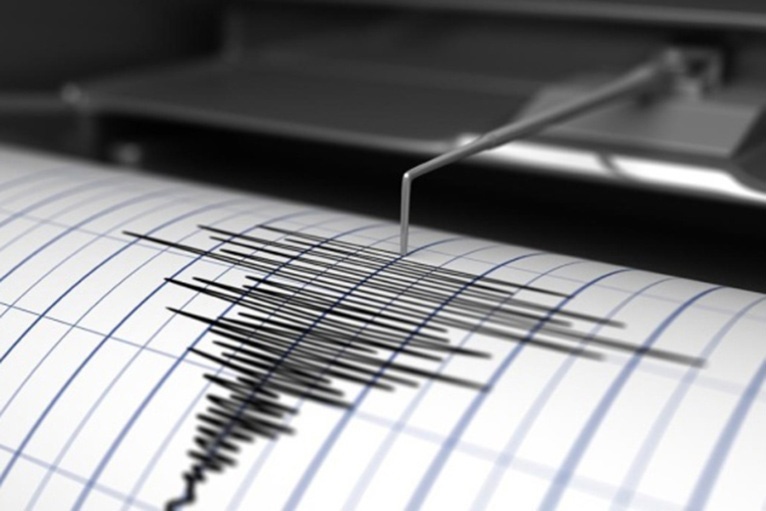
The scientists analyzed the quality of noise reduction and computational complexity using the example of seismic signals. The proposed algorithm allows you to more efficiently and quickly determine the seismic activity, for example, an earthquake. It can also be in demand in hydroacoustics, bioinformatics and other fields.
The study was conducted within the framework of a grant from the Russian Academy of Sciences. The scientists told about their development on the pages of the prestigious scientific journal IEEE Access.