
Creative code of the Caucasus: how culture and values save small towns from population outflow
Category: Main
The event brought together more than a hundred teachers of the course "Fundamentals of Russian Statehood" from universities in the South Russia, scientists of the NCFU Humanitarian Institute and representatives of specialized NGOs. The strategic session was organized by the Presidential Academy (RANEPA), the NCFU OMC together with the ANO "Creative Economy" with the support of the Presidential Foundation for Cultural Initiatives (PFCI).
The seminar was opened by Olesya Lyashenko, Director of the NCFU OMC. She stressed that the North Caucasus has a unique cultural code, which should become the foundation of the region's new economy — the economy of impressions and meanings.
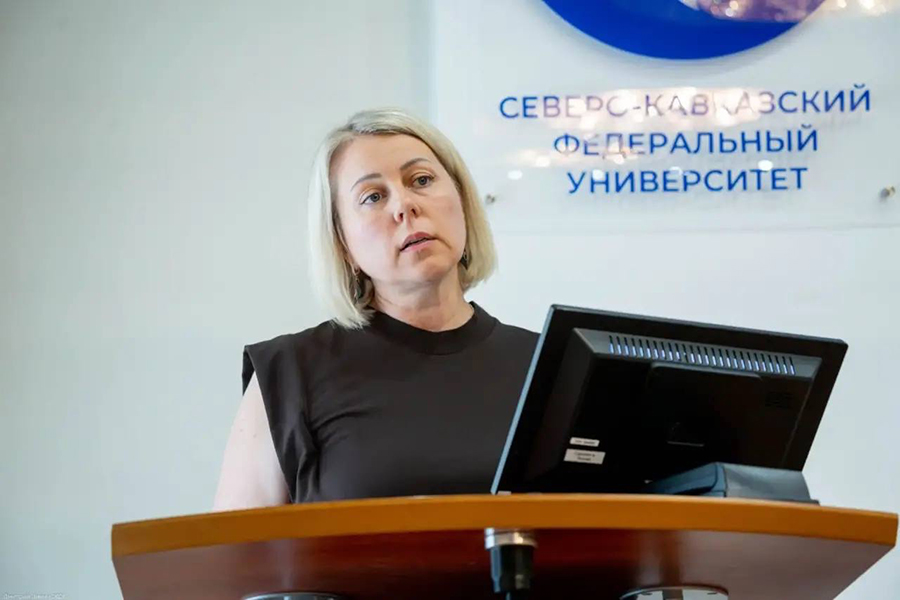
The plenary session set the semantic tone for the entire event. ""Roman Karmanov, General Director of the Presidential Foundation for Cultural Initiatives, Marina Mongush, President of the United Center for Creative Economics, Artem Kosmarsky, Head of the Research Center of the Autonomous Non-Profit Organization "Creative Economy", and Alena Pavlovskaya (ANO "Creative Economy") presented the reports.
All the speakers agreed that in order to achieve technological sovereignty, it is necessary to convert creative skills into real economic results.
The moderator of the plenary session was Alexander Yukhno, Head of the Network Projects Department at the Presidential Academy. He set a rigid vector for the discussion of semantic sovereignty.:
"The key struggle today is not on the physical battlefields, but in our heads. Creative industries are either a tool for translating our civilizational code, or a channel for the penetration of alien meanings. The task of a high school teacher is to educate the creator, not the consumer of content. And here artificial intelligence should work for us, helping to package traditional values in modern formats," said Alexander Yukhno.
Artyom Kosmarsky debunked the myth that clusters are created for show:
"The real social impact is measured not by square meters of exhibition space, but by demographics. Have people started to trust each other? Have you stopped going to Moscow? Have you started starting families? If the opening of an art space reduces the level of social loneliness, the project is successful. We need to sew meanings into architecture, public Service design, and music, otherwise our children will listen to other people's characters," the expert emphasized.
Small town rescue Cases:
Alyona Pavlovskaya demonstrated the practical implementation of these ideas by presenting two contrasting examples of working with territories.:
Kingisepp (Leningrad region): An industrial single-industry town. The city was losing young people, but mapping showed a hidden willingness: 46% of residents were ready to engage in creativity.
"The problem was not the lack of talent, but the lack of one outlet for everyone. As soon as the gastronomic space appeared, 48 artisans united around it. This is a classic example of identifying the DNA of a territory where no one was looking for it," Pavlovskaya said.
Ivanovo region: An example of specialization. The small towns of Yuryevets and Shuya have turned local brands (textiles, gastronomy) into economic drivers. The revenue of the creative sector here has surpassed the national average.
"Russia is a country of small towns. Without Shuya, there is no large textile industry in the country. The creator makes sure that the inhabitant of the hinterland is proud of the place where he was born and does not want to leave it," the speaker noted.
Stavropol road map:
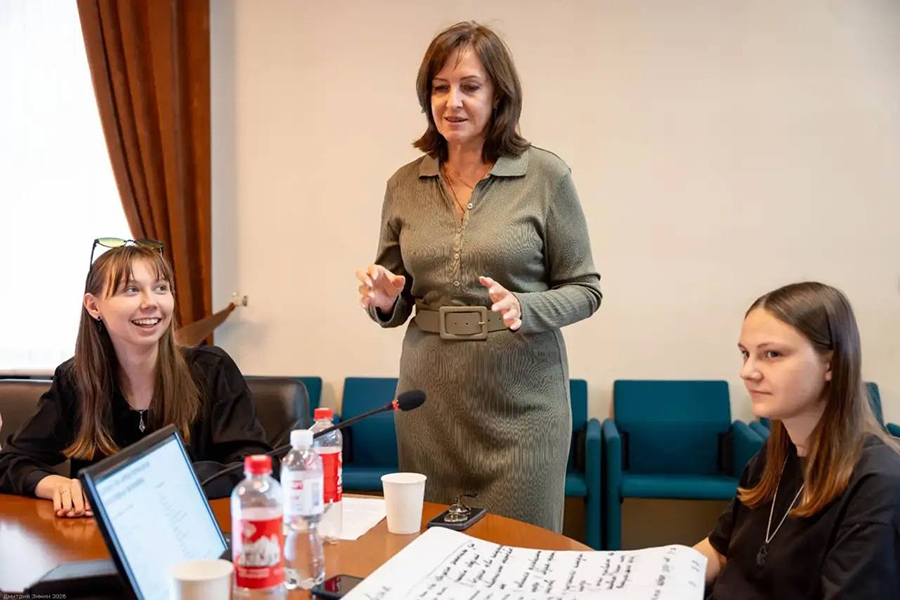
The seminar switched to the project work format. The participants were divided into groups to develop a roadmap for the development of creative industries in the Stavropol Territory. The priority areas are: creation of a regional atlas
creative brands of Caucasian Mineral Waters; integration of student startups into the tourist routes of Dombay and Arkhyz, as well as the development of the module "Creative Urbanism" for engineers of the Pyatigorsk Medical and Pharmaceutical Institute.
Following the meeting, proposals will be sent to the Ministry of Economic Development. Stavropol Territory and will form the basis of the region's application for the grant competition of the Presidential Foundation for Cultural Initiatives in 2027.