
The NCFU expert explained the catch of the "vacancies" with the registration of sole proprietors on the NPD
Category: Main
An expert from the North Caucasus Federal University (NCFU, Stavropol) explained the catch of "vacancies" with registration of sole proprietors for NPD, and how this differs from self-employment. Recently, such schemes have been offered by potential employers for those who are looking for remote work.
There are more and more vacancies on job search sites online, where companies are looking for employees to work remotely, but there is a nuance. Firms want potential employees to apply for sole proprietorship on the NPA – this is a scheme similar to self-employment, but still requiring the status of an individual entrepreneur. And here a logical question arises: is this a fraudulent scheme, and what risks does it pose to a job seeker?
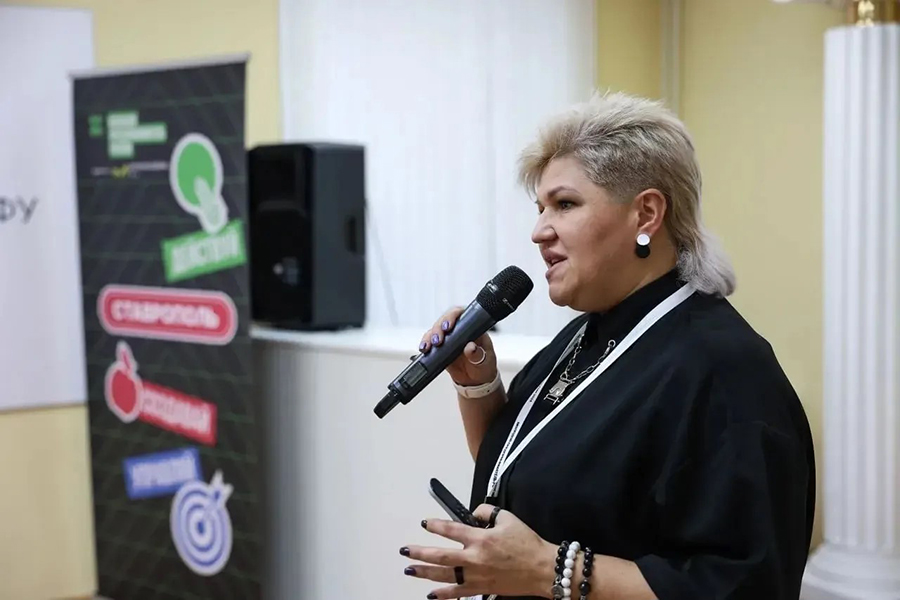
— The described scheme is not a classic fraud involving embezzlement of money, but unfair marketing with signs of deception. The applicant does not lose his money, but he loses time, energy and gets an unnecessary tax status. The statement "it's easier to make payments this way" is deceit. For a company, the difference between a self-employed individual and an individual entrepreneur in making payments is minimal, but for a person the difference is significant: an individual entrepreneur is a status with much more risks and consequences than an individual. The real reason is probably something else: partner banks pay a fee for attracting clients to register sole proprietors/RCOS. In this case, the applicant is not an employee, but a "lead" for the bank," says Oksana Mukhoryanova, associate professor of the Department of State, Municipal Management and Labor Economics at the NCFU Institute of Economics and Management.
In order to understand the situation, it is first necessary to explain what a sole proprietorship is and how it differs from ordinary self-employment. So, "self–employment" in Russia is the tax regime of the "Professional Income Tax" (NAP). It can be used by individuals without sole proprietorship status, as well as individual entrepreneurs. The key similarity lies in the fact that an individual entrepreneur pays the same taxes as an ordinary self–employed person - 4% on income from individuals and 6% on income from legal entities and sole proprietors. The reporting, that is, the declaration, is not submitted.
— The tax is calculated automatically in the My Taxes app based on receipts. You don't have to pay insurance premiums for yourself, you can do it voluntarily if you want to. However, there are differences: an individual cannot open a checking account for a business, whereas a sole proprietor has such a right. If we look at it from the point of view of customer perception, many large companies prefer to work with sole proprietors, because their status is "more serious" for counterparties. And finally, there are consequences if the limit is exceeded or violated: an individual simply loses the right to NPA, the sole proprietor needs to switch to another regime, close the sole proprietor, or change the taxation system," explains the NCFU expert.
If we talk in the context of job search and registration of an individual entrepreneur on the NPA, it is worth noting that if a "vacancy" provides a link to opening an individual entrepreneur through a bank, then he often receives a reward for registration, and then does not employ an employee. As the expert emphasizes, this is not fraud in the criminal law sense (Article 159 of the Criminal Code of the Russian Federation), since there is no theft of other people's property by deception: a person does not transfer money directly to a fraudster. However, there are signs of unfair advertising or misleading (Article 5 of the Federal Law "On Advertising" prohibits false advertising) and violations of labor laws regarding promises that will obviously not be fulfilled. The practical problem for the victim is that it is extremely difficult to prove intent on the initial unwillingness to find a job. A "vacancy" can be closed "for objective reasons" at any time.
— As for the restrictions in the amount of 60 hours, yes, it applies to sole proprietors who are NAP payers. Decree of the Government of the Russian Federation dated 06/19/2026 No. 760 "On Approval of the Criteria for the Consistency and Duration of work and Services Provided for in Paragraph 5 of Part 1 of Article 17 of the Federal Law "On Certain Issues of Regulating the Platform Economy in the Russian Federation", which entered into force on October 1, 2026, introduces a restriction: no more than 60 hours per month from by one customer through a digital platform for 6 consecutive months. If the limit is exceeded, the platform suspends the customer–contractor pair," adds Oksana Mukhoryanova.
It turns out that this restriction is not linked to the status (individual or sole proprietor), but to the tax regime and the way of working through the platform. Therefore, opening an individual entrepreneur does not "bypass" the limit. Moreover, the restriction applies only to work through digital platforms (aggregators, marketplaces) from the list of the Ministry of Economic Development. Direct contracts with customers without the participation of the platform are not subject to the restriction. If the employer offers to formalize an individual entrepreneur and work directly, the hours limit is not formally applied, but then the risks of retraining the relationship into an employment relationship by the Federal Tax Service increase.
The expert also noted the consequences of such relationships. If an employer forms out a relationship with a sole proprietor on a NPA, then he saves on insurance premiums and personal income tax, as with any self-employed person, he has no obligation to provide leave, sick leave, or a workplace, but he has the opportunity to terminate cooperation at any time without severance pay. At the same time, if the Federal Tax Service or the GIT determines that the relationship is of an employment nature (schedule, subordination, permanent function), the company will be charged additional personal income tax and insurance premiums. An administrative fine and reputational losses are also possible when the scheme is publicly reviewed.
— For the person himself, the advantages include a legal income with low taxes (4% or 6%), the ability to open a checking account, look "more serious" for customers, as well as the absence of mandatory insurance premiums. The latter, however, has disadvantages: pension points are awarded only when contributions are paid, and if the self-employed does not pay them, then their pension will remain at a minimum level. In addition, the IP status remains, even if the job was not given. This requires some attention: you need to submit declarations on time, you need to pay tax when income appears, and if you want to close an individual entrepreneur, you need to go through a rather complicated procedure. And yet: if a person works in parallel under an employment contract, the income of the sole proprietor on the NPD is taken into account separately, but requires discipline – these are checks and a limit of 2.4 million rubles, — says Oksana Mukhoryanova, an expert at NCFU.
At the moment, according to the Federal Tax Service and materials on platform employment, NAP is popular in the following niches of remote work formats:
· IT and software development (programmers, testers, technical support);
· Design and creativity (graphic, web);
· Marketing and advertising (copywriting, SMM, targeting, analytics);
· Education (tutors, online courses, consultations);
· Accounting and consulting (remote support);
· Translations and editing;
· Recruitment (HR outsourcing, remote recruitment) – it is noteworthy that the sphere itself is included in the "risk zone" for substitution of labor relations.
To protect yourself from the risk of getting into the situation under consideration, you need to remember a few simple rules.:
· do not follow the "partner link" to register an individual entrepreneur before signing an agreement or offer;
· do not agree to registration if there is no clear answer why it is impossible to work as a self-employed individual, the vacancy does not contain specific responsibilities, KPIs or payment terms, the "employer" is not a legal entity or sole proprietor (there are no details for verification);
· you should request a draft contract (GPH or provision of services) before registering an individual entrepreneur, check the customer's INN/OGRN in the FTS service, and request written confirmation that registering an individual entrepreneur is not a condition for employment.
Thus, the opening of an individual entrepreneur on the NPA is not a "formality for payments", but an entrepreneurial status with consequences. The 60-hour limit is not circumvented through the IP status. If the job is offered only "through the sole proprietor by reference", this is a reason to refuse and look for a direct customer.